Call us: 0800 843 752Free shipping for orders $150 or over
Gift Vouchers

portuguese laurel planting distance

Understanding the ideal Portuguese laurel planting distance is essential for anyone looking to create a lush, dense hedge or a striking standalone feature in their garden. Prunus lusitanica, commonly known as Portuguese laurel, is a popular evergreen with glossy, deep green leaves and clusters of fragrant white flowers. It thrives in New Zealand gardens, adapting to a range of conditions and providing reliable privacy and wind protection. Whether you are planning a formal boundary or a sweeping screen, careful spacing will ensure your plants grow vigorously, remain healthy, and look fantastic year-round.

Prunus lusitanica

5 from 2 customers

Prunus lusitanica, commonly known as the Portuguese Laurel, is a large shrub that is widely grown across the world. It features dark red stems that bear lush, dense, and dark green leaves. The white flowers are small and fragrant, followed by small, dark purple berries. It typically grows to 5 m tall and 4 m wide and can be trimmed as necessary. Prunus lusitanica is an excellent plant for a large garden. It is commonly used as a backdrop for smaller plants, planted for screening and shelter, used for topiary, or included in a “white” garden. Landscape designers favour Portuguese Laurels for their elegance and versatility.

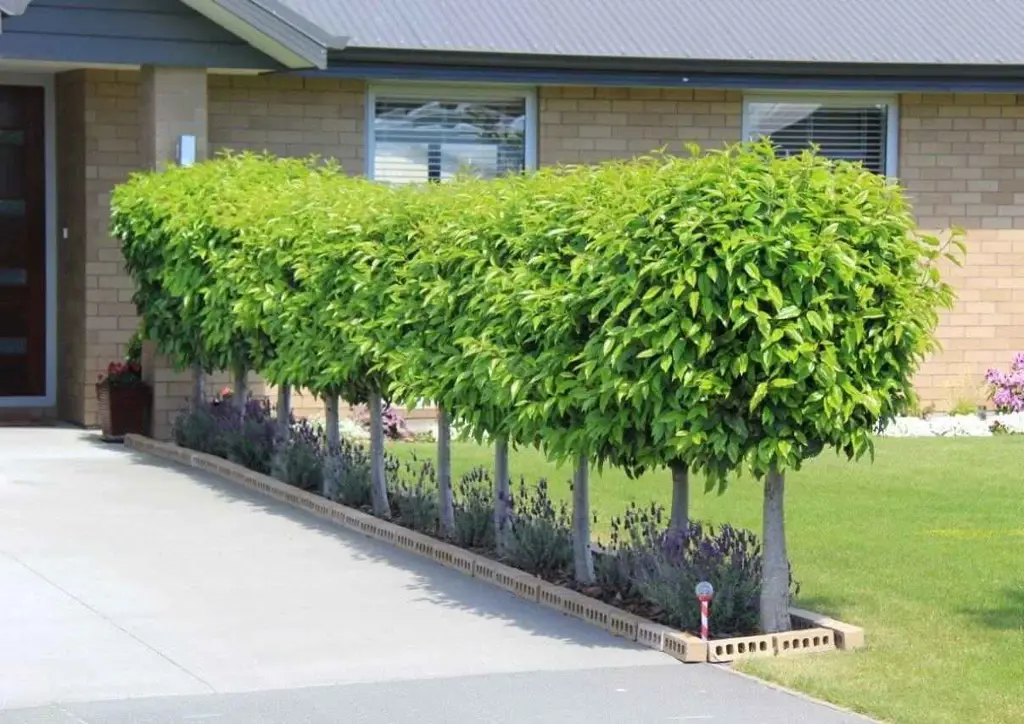
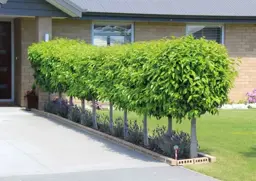
Portuguese Laurel (Prunus lusitanica) standard trees bordering a driveway.
  • Suited to regions:
    Subtropical, Temperate
  • Plant type:
    Shrubs
  • Height:
    5.00 m
  • Spread:
    4.00 m
  • Flowering time:
    Summer
  • Garden uses:
    Hedging, Pool areas, Screening, Topiary
  • Garden styles:
    Backyard, City & Courtyard, Cottage, Formal, Frontyard, Japanese, Modern, White

prunus-accolade-
Most Popular

Prunus Accolade

Prunus Accolade is a variety of Flowering Cherry that features masses of semi-double flowers. The frilly and pink blooms are borne in clusters...

From$299.92
prunus-amanogawa-
Most Popular

Prunus Amanogawa

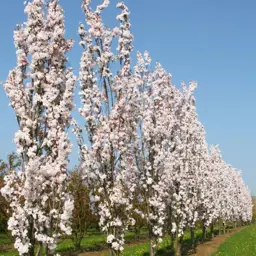
Prunus Amanogawa is a variety of Flowering Cherry that features masses of pale-pink flowers through spring. The mildly fragrant, semi-double flowers...

From$343.89
prunus-awanui-3
Most Popular

Prunus Awanui

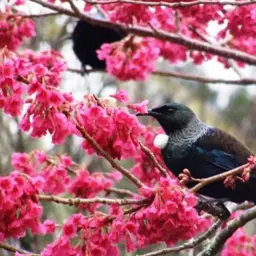
Prunus Awanui is a variety of Flowering Cherry that features masses of fragrant, pink flowers through spring. This deciduous tree grows with a vase...

From$343.89
prunus-falling-snow-
Most Popular

Prunus Falling Snow

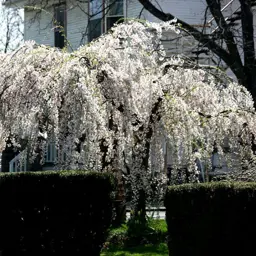
Prunus Falling Snow is a variety of Flowering Cherry grown for its pendulous growth and fantastic flowering. It features masses of single, white...

From$343.89
prunus-felix-jury-
Most Popular

Prunus Felix Jury

Prunus Felix Jury is a variety of Flowering Cherry that features masses of large, claret-red blossoms in spring which are held as pendulous clusters...

From$432.79
Coprosma 'Cappuccino' shrub with small, brown leaves.
Most Popular

Coprosma 'Cappuccino' (Brown Coprosma)

Coprosma 'Cappuccino' is a striking evergreen shrub valued for its rich chocolate brown foliage and compact rounded form. Well suited to New Zealand...

From$24.98
grevillea-eureka-1
Most Popular

Grevillea Eureka

Grevillea 'Eureka' is a compact, evergreen shrub known for its striking yellow and pink spider-like flowers. Blooming from spring through summer, it...

From$28.28
camellia-japonica-ballet-dancer-
Most Popular

Camellia 'Ballet Dancer'

Camellia 'Ballet Dancer' is a refined evergreen shrub admired for its elegant soft pink blooms and glossy dark green foliage. Flowering from late...

From$299.92
Loropetalum 'China Pink' ground cover plant with purple foliage.
Most Popular

Loropetalum 'China Pink'

Loropetalum 'China Pink' produces fragrant, pink flowers in winter, which are both unusual and appealing. The foliage is oval, rich purple, and held...

From$28.28
Gorgeous Hydrangea macrophylla 'Ayesha' pink flowers.
Most Popular

Hydrangea Ayesha

Hydrangea 'Ayesha' is a distinctive variety prized for its lilac-like flower clusters and subtle fragrance. The waxy, spoon-shaped petals and glossy...

From$29.63
Prunus lusitanica

Did you find what you are looking for?

You might be interested in exploring Prunus or Evergreen Shrubs.

Search Prunus lusitanica

How Far Apart Should Portuguese Laurel Be Planted?

The recommended Portuguese laurel planting distance depends on your desired outcome. For a tight, bushy hedge, plant Prunus lusitanica 1 to 1.5 metres apart. This spacing encourages plants to merge and form an impenetrable, leafy barrier within two to three years. If you prefer a more relaxed, informal look or want to maintain each specimen as a standalone shrub, increase the distance to 2 to 2.5 metres. This allows each Portuguese laurel to fill out, develop its natural shape, and ultimately reach its mature size of up to 5 metres tall and 3 metres wide.

Considerations for Hedges and Screens

When creating a hedge, consistent Portuguese laurel planting distance guarantees uniform growth and an even appearance. Before planting, prepare the soil by removing weeds and enriching it with compost. Younger plants may initially look sparse, but maintaining the recommended spacing ensures they don’t compete excessively for nutrients or light. If you’re blending Portuguese laurel with other hedging plants, such as Photinia 'Red Robin' or Physocarpus Shady Lady, adapt your planting scheme to suit the growth habits and mature sizes of each species.

Site Conditions and Planting Tips

Portuguese laurel enjoys well-drained soil, partial shade to full sun, and shelter from strong winds. When measuring the Portuguese laurel planting distance, consider the local climate and exposure. In coastal or windy sites, slightly closer planting can help the hedge fill out quickly and establish robust shelter. In fertile, sheltered gardens, stick to the standard spacing and prune as needed for shape.

Water young plants regularly, especially during dry spells, and mulch to conserve moisture and suppress weeds. Once established, Portuguese laurel is tolerant of drought, pollution, and light pruning, making it a low-maintenance addition to any landscape.

Complementary Plants for Portuguese Laurel

Portuguese laurel works beautifully alongside ornamental trees and flowering shrubs. For visual interest, try mixing with spring-flowering cherries like Prunus Accolade, upright forms like Prunus Amanogawa, or robust varieties such as Prunus Awanui. Add texture and fragrance with companion shrubs like Geniostoma ligustrifolium, Agapetes serpens (Pentapterygium serpens), or aromatic Rosmarinus 'Mozart'.

Summary

Setting the correct Portuguese laurel planting distance is the foundation for a successful hedge or specimen planting in your New Zealand garden. Aim for 1 to 1.5 metres for dense hedges, and 2 metres or more for individual shrubs. With proper preparation and thoughtful selection of companion plants, your Portuguese laurel will reward you for years to come.


Contact us

Whether you need assistance finding the plant you’re looking for or you simply want to know more about who we are and what we do, we invite you to get in touch with us today. A member of The Plant Company team will get back in touch as soon as possible.

–The Plant Company

Explore Garden Inspiration

Sign up to receive a free $10 Voucher You won’t be bombarded with emails, just titbits of quality information from time to time Sign up
Free shipping on orders over $150!

Join our community of happy customers.

4.9

429 Google reviews