Call us: 0800 843 752Free shipping for orders $150 or over
Gift Vouchers

how to grow portuguese laurel

Portuguese Laurel (Prunus lusitanica) has fast become a favourite for New Zealand gardens, thanks to its glossy evergreen leaves, fragrant white flowers, and versatility as a hedge or specimen tree. If you're wondering how to grow Portuguese laurel for a dense privacy screen, attractive boundary, or simply to add lush structure to your landscape, you're in the right place. This guide will walk you through planting, care, and maintenance, so your Portuguese laurel thrives in Kiwi conditions.

Prunus lusitanica

5 from 2 customers

Prunus lusitanica, commonly known as the Portuguese Laurel, is a large shrub that is widely grown across the world. It features dark red stems that bear lush, dense, and dark green leaves. The white flowers are small and fragrant, followed by small, dark purple berries. It typically grows to 5 m tall and 4 m wide and can be trimmed as necessary. Prunus lusitanica is an excellent plant for a large garden. It is commonly used as a backdrop for smaller plants, planted for screening and shelter, used for topiary, or included in a “white” garden. Landscape designers favour Portuguese Laurels for their elegance and versatility.

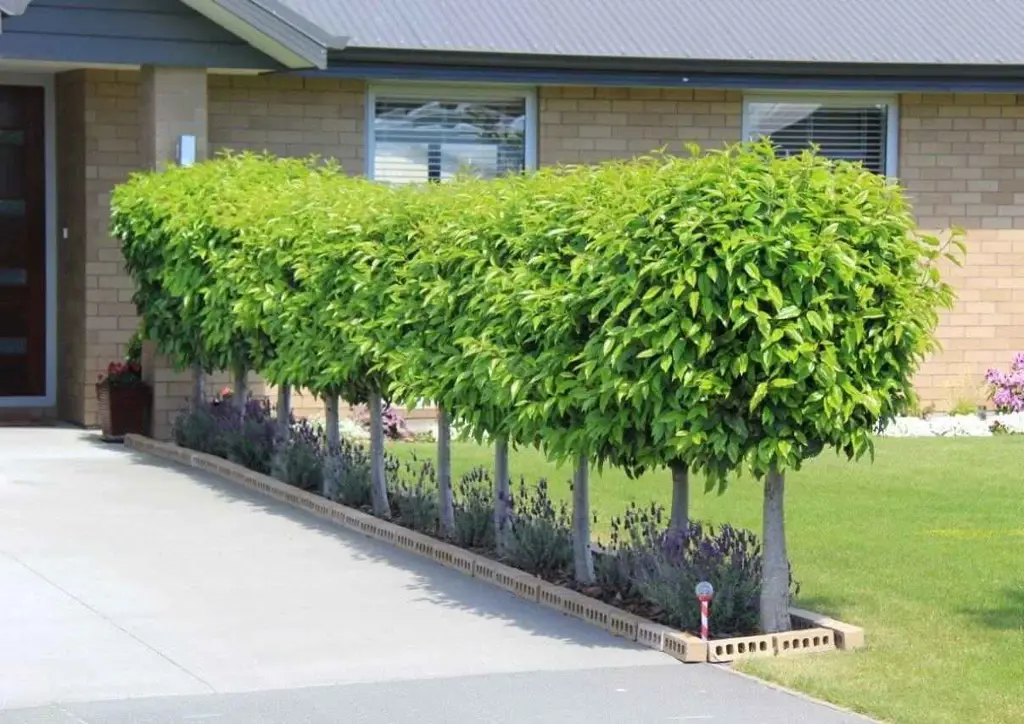
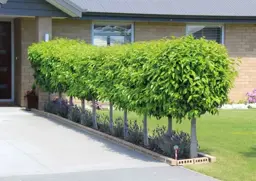
Portuguese Laurel (Prunus lusitanica) standard trees bordering a driveway.
  • Suited to regions:
    Subtropical, Temperate
  • Plant type:
    Shrubs
  • Height:
    5.00 m
  • Spread:
    4.00 m
  • Flowering time:
    Summer
  • Garden uses:
    Hedging, Pool areas, Screening, Topiary
  • Garden styles:
    Backyard, City & Courtyard, Cottage, Formal, Frontyard, Japanese, Modern, White

prunus-accolade-
Most Popular

Prunus Accolade

Prunus Accolade is a variety of Flowering Cherry that features masses of semi-double flowers. The frilly and pink blooms are borne in clusters...

From$299.92
prunus-amanogawa-
Most Popular

Prunus Amanogawa

Prunus Amanogawa is a variety of Flowering Cherry that features masses of pale-pink flowers through spring. The mildly fragrant, semi-double flowers...

From$343.89
prunus-awanui-3
Most Popular

Prunus Awanui

Prunus Awanui is a variety of Flowering Cherry that features masses of fragrant, pink flowers through spring. This deciduous tree grows with a vase...

From$343.89
prunus-falling-snow-
Most Popular

Prunus Falling Snow

Prunus Falling Snow is a variety of Flowering Cherry grown for its pendulous growth and fantastic flowering. It features masses of single, white...

From$343.89
prunus-felix-jury-
Most Popular

Prunus Felix Jury

Prunus Felix Jury is a variety of Flowering Cherry that features masses of large, claret-red blossoms in spring which are held as pendulous clusters...

From$432.79
rhododendron-tropical-glow-
Most Popular

Rhododendron Vireya Tropic Glow

Rhododendron Vireya ‘Tropic Glow’ is a tropical shrub growing up to 1.5 metres tall with a compact, rounded growth habit. Known for its vivid orange...

From$28.28
Lavender 'Hidcote' small shrub with elegant blue flowers and green foliage.
Most Popular

Lavender angustifolia 'Hidcote'

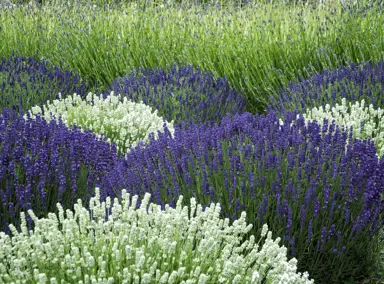
Lavender 'Hidcote' is a stunning variety that grows as a compact shrub and carries masses of short, violet-purple flower spikes through spring and...

From$24.98
camellia-japonica-black-lace-
Most Popular

Camellia 'Black Lace'

Camellia 'Black Lace' is a dramatic evergreen shrub admired for its deep velvety red blooms set against glossy dark green foliage. Flowering from...

From$37.73
Gardenia augusta 'Lace Lady' shrub with green foliage and masses of white flowers.
Most Popular

Gardenia Lace Lady

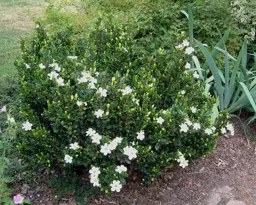
Gardenia 'Lace Lady' is a compact, evergreen shrub prized for its delicately ruffled, highly fragrant white flowers and glossy dark green foliage...

From$26.93
camellia-japonica-black-tie-
Most Popular

Camellia 'Black Tie'

Camellia 'Black Tie' is a sophisticated evergreen shrub admired for its large formal deep red blooms and glossy dark green foliage. Flowering from...

From$33.68
Prunus lusitanica

Did you find what you are looking for?

You might be interested in exploring Prunus or Evergreen Shrubs.

Search Prunus lusitanica

Why Choose Portuguese Laurel?

Prunus lusitanica offers year-round greenery and is highly valued for hedges and screening. Its leaves are deep green and leathery, creating a tidy, formal look. In summer, clusters of scented white flowers attract pollinators, followed by black berries. Portuguese laurel is well-suited to New Zealand's temperate climate and tolerates wind, salt spray, and urban pollution. If you're exploring other Prunus trees for flowering interest, consider the stunning Prunus Accolade or upright Prunus Amanogawa.

Site Selection and Planting

When thinking about how to grow Portuguese laurel, start by selecting the right site. Choose a spot with well-drained soil and partial to full sun. Portuguese laurel is adaptable but performs best with at least a few hours of sun each day. If your soil is heavy, amend it with compost to improve drainage.

Dig a hole twice the width of the root ball and just as deep. Place your Portuguese laurel so the crown sits level with the soil surface. Backfill gently and water thoroughly. Space plants about 1 metre apart for a thick hedge or further apart for individual specimens. Mulch around the base to suppress weeds and retain moisture.

Watering and Feeding

Newly planted Portuguese laurel will need regular watering, especially during the first year. Once established, these shrubs are drought-tolerant. In dry spells, a deep soak every couple of weeks is ideal. Feed in early spring with a balanced fertiliser. Well-fed laurels produce richer foliage and more abundant flowers. For colour and contrast in your planting scheme, pair with Lavender 'Blue Mountain' or striking Pieris japonica.

Pruning and Maintenance

To keep Portuguese laurel neat and compact, prune once or twice a year—late spring or early autumn is ideal. This encourages bushiness and helps you maintain your desired shape. Remove any dead or damaged branches and thin out congested stems. For easy-to-maintain hedges, Portuguese laurel is a reliable option alongside evergreens like Pittosporum Miracle (Black Matipo).

Troubleshooting Common Issues

Portuguese laurel is generally trouble-free. Watch out for scale insects or leaf spot, especially if airflow is poor. Avoid waterlogging, as this can lead to root rot. Healthy, well-pruned plants seldom suffer serious problems.

Functional Planting and Combinations

If you're planning a layered garden, Portuguese laurel makes an excellent backdrop for vibrant shrubs such as Lophomyrtus 'Kathryn' or seasonal showstoppers like Hydrangea 'Red Sensation'. Its elegant foliage also provides a classic contrast to blossom trees like Prunus Awanui, Prunus Falling Snow, or Prunus Felix Jury.

Summary

Knowing how to grow Portuguese laurel ensures you enjoy robust hedges, lush screens, and elegant boundaries in your New Zealand garden. With the right site, care, and thoughtful pruning, Prunus lusitanica will reward you for years to come—creating a landscape that feels inviting, resilient, and truly yours.


Contact us

Whether you need assistance finding the plant you’re looking for or you simply want to know more about who we are and what we do, we invite you to get in touch with us today. A member of The Plant Company team will get back in touch as soon as possible.

–The Plant Company

Explore Garden Inspiration

Sign up to receive a free $10 Voucher You won’t be bombarded with emails, just titbits of quality information from time to time Sign up
Free shipping on orders over $150!

Join our community of happy customers.

4.9

433 Google reviews