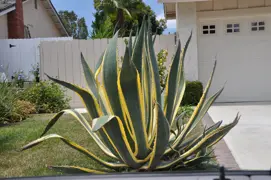
Agave americana 'Variegata' is a striking evergreen succulent valued for its bold architectural form and strongly variegated foliage. It forms a...

Agave tequilana (Tequila Agave) is a bold and dramatic succulent best known as the source of tequila production in Mexico. It features striking...
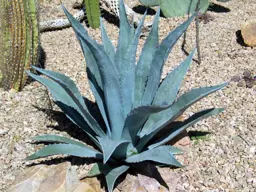
Agave americana (Century Plant) is an iconic succulent renowned for its dramatic rosettes of large, grey green leaves with bold spines along the...
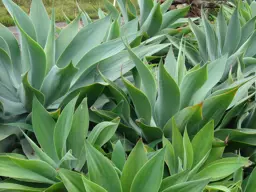
Agave attenuata (Foxtail Agave) is a highly ornamental succulent known for its smooth, spineless leaves and graceful rosettes. Unlike many agaves, it...

Agave 'Ray of Light' is an excellent selection of the commonly known, Fox Tail Agave. This plant features rosettes of broad, pale green leaves with a...

Agave americana 'Mediopicta Alba' is a striking architectural succulent valued for its bold blue green leaves with a dramatic creamy white central...

Agave americana 'Mediopicta Aurea' is a striking evergreen succulent prized for its bold variegated foliage and dramatic architectural form. It...

Agave americana var Franzosinii is a striking evergreen succulent prized for its large rosettes of broad, powdery blue grey leaves and dramatic...

Agave attenuata 'Boutin Blue' is a stunning succulent prized for its soft, spineless leaves in an attractive blue grey shade. Forming elegant...

Agave 'Blue Flame' is grown for its foliage and hardy nature. This succulent produces rosettes of broad, fleshy, blue leaves. The leaves protrude...
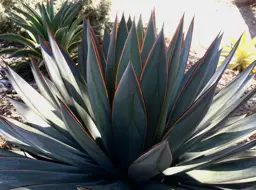
Agave 'Blue Glow' is a striking evergreen succulent prized for its compact rosette of blue green leaves edged with contrasting red and yellow...

Agave celsii is a striking succulent valued for its rosettes of broad, fleshy green leaves with smooth edges and a bold architectural form. Unlike...

Agave chiapensis (Mexican Agave) is a rare and attractive agave species native to southern Mexico, prized for its broad, glossy green leaves and...
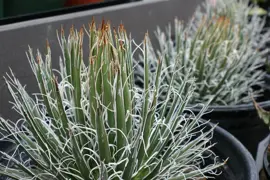
Agave chrysantha is a striking evergreen succulent valued for its bold rosettes of rigid, blue green to grey green leaves and strong architectural...

Agave 'Cream Spike' is a compact evergreen succulent prized for its striking variegated foliage and tidy architectural form. It forms neat rosettes...

Agave decipiens is a striking architectural succulent valued for its upright growth habit and dense rosettes of narrow green leaves. Unlike many...
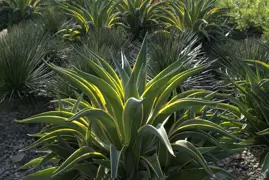
Agave desmettiana 'Variegata' is a striking evergreen succulent valued for its elegant variegated foliage and bold architectural form. It forms...

Agave geminiflora (Twin Flower Agave) is a highly ornamental succulent admired for its dense rosette of narrow dark green leaves adorned with...

Agave guadalajarana is a compact and highly ornamental succulent admired for its symmetrical rosette of broad blue green leaves. The attractive...

Agave havardiana is a striking evergreen succulent valued for its compact rosettes of thick blue grey leaves and bold architectural form. The rigid...

Agave 'Joe Hoak' is a striking evergreen succulent prized for its elegant variegated foliage and bold architectural form. It forms attractive...

Agave 'Kissho Kan' is a compact evergreen succulent prized for its beautifully variegated foliage and neat architectural form. It forms symmetrical...

Agave montana is a striking evergreen succulent valued for its dense rosette of broad, deep green leaves and bold architectural form. The thick...

Agave multifilifera is a distinctive ornamental succulent admired for its dense rosette of green leaves decorated with numerous fine white filaments...

Agave nickelsiae is a distinctive evergreen succulent prized for its compact, symmetrical rosette and beautifully marked foliage. The broad, dark...

Agave ovatifolia is a striking evergreen succulent prized for its broad, blue grey foliage and bold architectural form. The thick leaves form a...

Agave ovatifolia 'Frosty Blue' is a striking evergreen succulent prized for its broad, powdery blue foliage and bold architectural form. The thick...
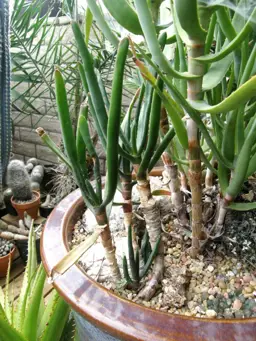
Agave parallelifolia is a distinctive evergreen succulent valued for its compact rosette of narrow, rigid leaves and strong architectural form. The...

Agave parrasana is a striking evergreen succulent valued for its compact rosette of broad blue grey leaves and bold architectural form. The thick...

Agave parryi is a striking evergreen succulent valued for its compact rosettes of broad blue grey leaves and bold architectural form. The thick...